

A Lot Changed for US Cannabis Law in the Last Six Months - Here's the Short Version
Key Takeaways
- A November 2025 law narrows the definition of legal hemp based on chemical content.
- President Trump signed an executive order to expedite marijuana rescheduling.
- In April 2026, the DOJ immediately moved FDA-approved and medical marijuana to Schedule III. Recreational cannabis remains Schedule I.
- The DEA had a formal rescheduling hearing and reassigned marijuana as Schedule III.
Keeping up with cannabis law lately? A new law narrowing what counts as legal hemp, an executive order on rescheduling, and a DEA hearing that went from June 29th to July 15th.
What the November 2025 Law Changes for Hemp
On November 12, 2025, President Trump signed the Continuing Appropriations and Extensions Act, 2026 (P.L. 119-37). Under the 2018 Farm Bill, hemp was defined by a single threshold: no more than 0.3% delta-9 THC on a dry weight basis.
The new law replaces that with a total THC standard that now includes THCA and other cannabinoids with similar effects, and caps finished hemp-derived products at 0.4 milligrams of combined total THC per container.
In practice, the change takes aim at THCA-forward products that expanded under the original Farm Bill framework. Industry groups have warned the 0.4mg limit could affect up to 95% of current hemp-derived consumer products.
The law takes effect November 12, 2026, though several states are already aligning their rules with the narrower definition ahead of that date. For your specific state, check local definitions and stay informed.
Traditional CBD hemp flower grown within the 0.3% delta-9 threshold sits on more stable ground. We recommend that you review a product's certificate of analysis and full cannabinoid profile before you buy.

Marijuana Rescheduling - Where the Process Stands
On December 18, 2025, President Trump signed Executive Order 14370, directing the DOJ to complete the rescheduling of marijuana from Schedule I to Schedule III as expeditiously as possible.
On April 23, 2026, Acting Attorney General Todd Blanche signed an order immediately placing FDA-approved marijuana products and state-licensed medical marijuana into Schedule III. Recreational cannabis remains in Schedule I.
A Schedule III classification would not federally legalize cannabis, but it would reduce criminal penalties for some offenses and ease research requirements. It would also allow businesses to deduct expenses currently blocked by Section 280E of the tax code, which prevents businesses from getting tax credits or deductions if they deal in Schedule I and II substances.
The DEA Hearing That's Happening Right Now
On June 29, 2026, the DEA opened a formal administrative hearing in Arlington, Virginia, on whether all cannabis, including adult-use products, should move to Schedule III. The hearing concluded on July 15th, and the transcripts are open to small edits by participants until August 17th.
Moving cannabis to Schedule III opens up avenues for business owners, researchers, and average people that can benefit from medical marijuana prescriptions.
Because the DEA is the proponent of the rule, only parties opposed to rescheduling were selected to testify, a structure that drew criticism from reform advocates who were not included. After the hearing closes, parties file post-hearing briefs, an administrative law judge issues a recommended decision, and the DEA Administrator conducts a final review. A final rule could come as soon as late 2026 or early 2027, though legal challenges remain possible.
What This Means If You Buy Hemp Flower
The November 2025 law's sharpest restrictions target synthetic and intoxicating hemp derivatives, not traditional CBD hemp flower grown within the 0.3% delta-9 THC standard. Farm Bill-compliant flower remains the clearest footing in this regulatory shift.
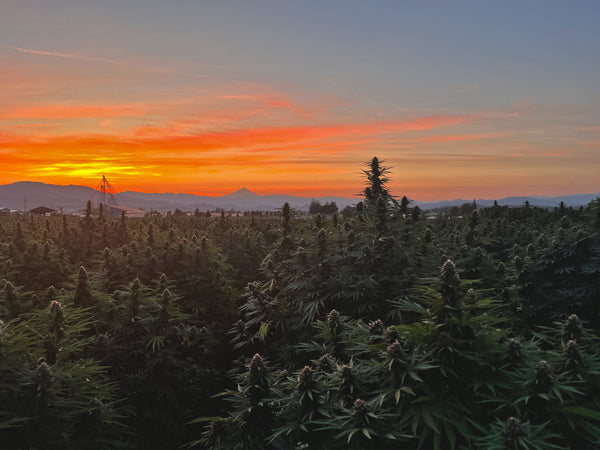
We grow all of our flower on our Southern Oregon farm, third-party lab tested and compliant with the 2018 Farm Bill, with less than 0.3% delta-9 THC. Please check your local laws before placing your order.

Frequently Asked Questions
Does the November 2025 law affect traditional CBD hemp flower?
The law primarily targets synthetic and intoxicating hemp derivatives like delta-8 and delta-10 THC. Traditional CBD hemp flower grown within the 0.3% delta-9 threshold sits on more stable ground.
If you’re buying something new or trying a new store, review the certificate of analysis to make sure you’re within your state’s legal considerations.
What does rescheduling mean for cannabis?
Rescheduling cannabis to a Schedule III would ease restrictions on how citizens, patients, and researchers can use it. It would partially decriminalize certain smaller offenses and open doors to better research into medical uses for cannabis.
This is only true for medical cannabis, which have different definitions and requirements state-by-state. Recreational cannabis is still a Schedule I drug and has the same restrictions.
When will we know more about rescheduling?
The DEA hearing concluded July 15, 2026, moving cannabis to Schedule III. Parties had the opportunity to submit edits or additions to post-hearing briefs and an administrative law judge will issue a recommended decision. A final rule could arrive as early as late 2026, though legal challenges may extend that timeline to 2027. Follow ongoing news to stay informed about scheduling changes.
Latest Posts