

Slow-Cured Hemp: How Does Drying Change Flavor in Flower?
Key Takeaways:
- Slow curing helps preserve the natural flavor and aroma of hemp flower.
- Temperature, humidity, and airflow all influence the drying process.
- Excessive heat can cause terpenes to evaporate, leaving flower with a weaker aroma.
- Proper curing helps moisture distribute evenly throughout the flower before packaging.
Fresh hemp flower is pretty damp. And anyone who’s ever left wet grass sitting in a pile knows what can happen when plant material holds onto too much moisture.
Mold. That awful musty smell. Nobody wants that.
Growers have to dry their hemp flower before it’s ready for packaging, and there’s a lot that can go wrong along the way. Crank up the heat to hurry things along, and some of the natural aromas can disappear.
That’s where slow curing comes in.
So what happens during those days and weeks after harvest? And how much does the drying process really change the flavor and smell of hemp flower?
What Is Slow-Cured Hemp Flower?
Hemp flower doesn’t come off the plant ready to go into a bag. There’s still water trapped inside those buds, along with that strong, green smell you get when you cut into just about any fresh plant.
And it’s noticeable. Slow down. Seriously.
When you harvest hemp, rushing the dry is a rookie mistake. You have to give it time.
- Hang the flower.
- Let the moisture slowly redistribute
- Wait out the clock.
If you bag it wet, you get mold. Too fast, and you destroy the terpenes. The whole thing takes time, patience, and a whole lot of watching paint dry. Why take so long?
Smell that? Those are terpenes. They give hemp flower its real personality: citrus, sharp pine, or straight-up skunk.
Protecting them comes down to a few basic rules:
- Heat destroys them. Fast.
- Crank the temp, and your aroma evaporates.
- Gentle air wins every time.
And no two harvests act the same. Ever.
Big, heavy colas trap moisture deep in the center while smaller popcorn buds dry out in a flash. Same plant, same room, totally different timelines. It’s a moving target, really. You just have to read the room and adjust as you go.
How Does the Hemp Drying Process Work?
Picture a room full of freshly cut hemp branches hanging upside down. There’s a grassy smell in the air, probably a few fans humming somewhere, and a grower checking the temperature for what feels like the hundredth time.
Standard drying rig. Chop the plant, hang whole branches upside down, or spread individual CBD buds across mesh drying racks. Direct airflow is everything here. You want damp air moving off the flower steadily, without cooking the room or turning it into a swamp.
Watch these like a hawk:
- Heat. Blast them with hot air, and you fry off your delicate terpenes instantly.
- RH Levels. Too wet, and mold moves in overnight. Too dry? Crispy hay.
- Air movement. Keep fans moving, but don’t aim them right at the hanging flower. (Tempting, but it ruins the cure.)
- Chunkiness. Fat, heavy colas stay wet way longer than tiny lower popcorn nugs.
And then you wait.
Some harvests take about a week to dry. Others need longer, especially when the buds are thick, or the room conditions aren’t quite cooperating.
Growers often check the smaller stems to see whether they’re starting to snap instead of bend, although that alone doesn’t tell them everything about the moisture inside the flower.
Once the buds have dried enough, they’re ready for curing.
What Happens During the Curing Process?
The flower’s dry. Then comes curing.
That means keeping the dried flower in a room with controlled temperature and humidity. You’re basically waiting for internal moisture to level out.
Boring? Absolutely.
Except you can’t just walk away. Water loves hiding in the middle of dense buds. Forget about them, and mold turns your entire harvest into garbage overnight.
- Check the room.
- Watch the humidity.
- Adjust as you go.
Some days everything is dialed in; other days you’re fighting humidity spikes.
And then… the smell shifts. That harsh, freshly cut lawn smell starts disappearing. In its place is pure terpene profile. Dank, loud, and distinct, assuming you didn’t cook them during drying.
Staring at hygrometers for weeks is painful. But ask anyone who spent four months growing a crop if they’d rather risk mold at the finish line. Not a chance.
How Does Slow Curing Affect Hemp Flower Flavor and Aroma?

Crack open a bag. Maybe you get pine. Maybe citrus, something earthy, or that unmistakable skunky smell that somehow manages to fill an entire room.
You’ve got terpenes to thank for that.
These aromatic compounds are found naturally in hemp flower, and they’re pretty sensitive to heat. Turn up the temperature too much during drying, and some can evaporate before the flower ever makes it into a bag.
The same compounds play a part in the flavor, too. A flower that starts out smelling like fresh lemon peel can lose some of that character when the drying conditions get out of hand.
Freshly cut hemp has a green, plant-like smell that can linger when the flower hasn’t been properly dried and cured. Some of those notes may soften over time, giving the other aromas a chance to come through.
How Rogue Origin Dries and Cures Its Hemp Flower
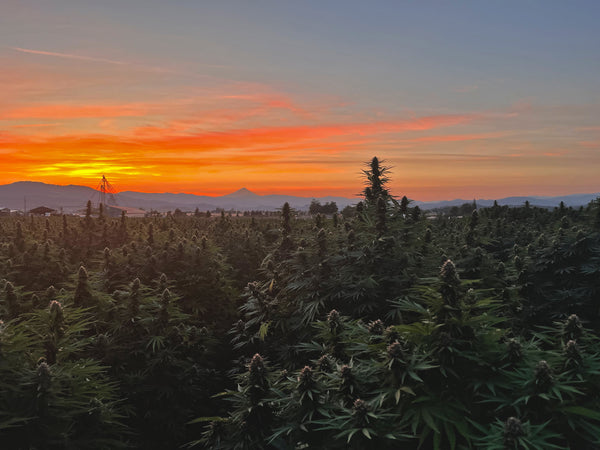
Growing hemp flower takes months. We’ve got planting, watering, watching the weather, and keeping an eye on whatever else Mother Nature decides to throw our way.
Then the harvest finally arrives.
At Rogue Origin, we hang whole branches upside down on aluminum drying hangers in our dry barn for a 10 to 14 day dry and cure. Then the flower stays on the stem in Super Sacks, in a temperature- and humidity-controlled room, until it’s hand-trimmed. We take that time because we want those natural flavors and aromas to make it all the way from our Southern Oregon farm to your bag..
Explore our hemp flower and see what’s currently available.
Frequently Asked Questions (FAQs)
How long does it take to slow-cure hemp flower?
It depends on the cultivar, drying conditions, and curing method. Our branches hang for a 10 to 14 day dry and cure before they go into Super Sacks.
Does curing hemp flower change its terpene profile?
It can. Some terpenes evaporate or change during drying and curing, particularly when exposed to excessive heat. Careful temperature control helps limit those losses.
What’s the difference between drying and curing hemp flower?
Drying removes most of the excess moisture after harvest. Curing comes afterward, allowing the remaining moisture to spread more evenly throughout the buds.
Does slow curing affect CBD content?
CBD content can change during processing and storage, although slow curing doesn’t automatically increase it. Temperature, light, and storage conditions can all influence cannabinoid stability.
Latest Posts